The Future of Display Technology: Transparent OLED Paves the Way for Immersive Experiences
Explore the revolutionary potential of Transparent OLED technology, its current applications, and the exciting future it promises across various industries, from consumer electronics to automotive and beyond.
The Dawn of Transparency: Unveiling the Potential of Transparent OLED
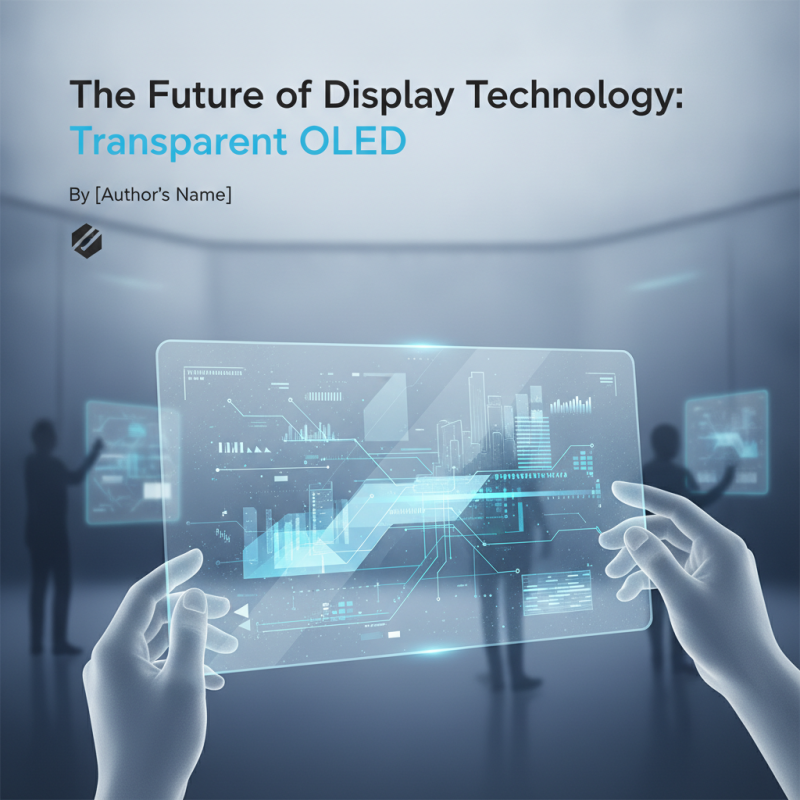
The world of display technology is in a constant state of evolution, pushing the boundaries of what's visually possible. Among the most exciting advancements on the horizon is Transparent Organic Light-Emitting Diode (OLED) technology. Unlike traditional displays that block light, Transparent OLEDs allow light to pass through them, opening up a universe of novel applications and immersive experiences that were once confined to the realm of science fiction. This innovative technology promises to redefine how we interact with information and entertainment, seamlessly blending digital content with our physical surroundings.What is Transparent OLED? A Glimpse into the Technology
At its core, Transparent OLED technology builds upon the established principles of OLED displays. OLEDs are renowned for their exceptional image quality, characterized by vibrant colors, true blacks, and high contrast ratios. This is achieved through organic compounds that emit light when an electric current is applied. The "transparent" aspect is achieved by strategically omitting the opaque backplane and reflective layers commonly found in traditional LCD or even standard OLED panels. Instead, Transparent OLEDs utilize a transparent substrate and transparent electrodes, allowing a significant portion of light to pass through the panel. The key to their transparency lies in the very nature of OLED pixels. Each pixel is a self-emissive unit, meaning it generates its own light. This eliminates the need for a separate backlight, which is a primary source of opacity in LCDs. By making the conductive layers and substrate transparent, the display becomes see-through when its pixels are off, offering a unique visual duality. When the pixels are illuminated, they display vibrant images, and when they are off, the display becomes virtually invisible, revealing what lies behind it.The Advantages of Going Transparent
The inherent transparency of OLEDs offers a distinct set of advantages that set them apart from conventional display technologies:- Seamless Integration: The ability to overlay digital information onto real-world views is perhaps the most compelling advantage. This allows for augmented reality experiences without bulky headsets, dynamic signage that blends with its environment, and interactive displays that enhance physical spaces.
- Enhanced Aesthetics: Transparent displays can significantly improve the visual appeal of products and environments. Imagine sleek, minimalist retail displays or automotive dashboards that appear to float within the cabin, integrating information without obstructing the view.
- Space Efficiency: By combining display functionality with the ability to see through, these panels can save physical space. A transparent display can serve as both a screen and a window, reducing the need for separate physical components.
- Immersive Experiences: The fusion of digital content with physical reality creates deeply engaging and immersive experiences. This is particularly relevant for entertainment, education, and interactive art installations.
- Energy Efficiency (Potentially): While still an evolving area, the localized illumination of OLED pixels can contribute to energy efficiency compared to back-lit displays, especially when displaying dark content.
Current Applications: Where Transparent OLED is Making its Mark
While still a burgeoning technology, Transparent OLED is steadily finding its way into various commercial and experimental applications, showcasing its versatility and immediate impact: Retail and AdvertisingThe retail sector is one of the earliest adopters of Transparent OLED. Imagine shop windows that transform into dynamic digital billboards, showcasing products and promotions while still allowing potential customers to see inside the store. This technology can create captivating in-store displays that highlight product features or provide interactive information without obscuring the merchandise. Companies are using these displays to create engaging product demonstrations and to offer personalized shopping experiences.
Automotive IndustryThe automotive sector is exploring Transparent OLED for futuristic dashboard interfaces and heads-up displays (HUDs). Instead of a traditional dashboard, a transparent OLED panel could display navigation, speed, and vehicle information directly onto the windshield or a transparent surface within the cabin. This not only enhances the aesthetic appeal of the car's interior but also improves driver safety by keeping critical information within the driver's line of sight without obstructing their view of the road.
Museums and ExhibitionsMuseums and art galleries are leveraging Transparent OLED to create unique and informative exhibits. Displays can be placed in front of artifacts, providing contextual information, historical data, or 3D reconstructions that appear to float around the objects themselves. This enhances the educational value and interactive engagement of the visitor experience.
Smart Home Devices and FurnitureThe integration of Transparent OLED into smart home devices is also gaining traction. Imagine a refrigerator door that doubles as a display for recipes, shopping lists, or family calendars, or a coffee table that can transform into an interactive gaming surface. This technology allows for seamless integration of digital functionality into everyday objects, making them more intelligent and aesthetically pleasing.
Architecture and Interior DesignArchitectural applications are also being explored, where transparent displays could be integrated into building facades, partitions, or even windows to provide dynamic information, artistic visuals, or privacy control. This opens up new possibilities for creating adaptive and responsive living and working spaces.
The Road Ahead: Future Prospects and Innovations
The current applications of Transparent OLED are just the tip of the iceberg. The technology is poised for significant advancements, promising even more groundbreaking uses in the coming years: Enhanced Transparency and BrightnessOngoing research and development are focused on improving the transparency levels and brightness of these displays. Achieving near-perfect transparency while maintaining vibrant and visible images, even in bright ambient light, will be crucial for wider adoption. Innovations in materials and manufacturing processes are expected to address these challenges.
Larger Form Factors and FlexibilityWhile currently available in smaller to medium sizes, the development of larger Transparent OLED panels and even flexible or rollable versions will unlock new possibilities. Imagine entire building facades or large-scale interactive installations that are fully transparent and dynamic.
Advanced AR/VR IntegrationTransparent OLEDs are a natural fit for the future of augmented and virtual reality. They could form the basis of advanced AR glasses that overlay detailed digital information onto the real world with unparalleled clarity and immersion, without the bulk of current headsets. This could revolutionize fields like gaming, professional training, and remote collaboration.
Interactive and Touch-Enabled SurfacesThe integration of touch sensitivity into Transparent OLED displays will create truly interactive surfaces. This could lead to intelligent windows, tables, and walls that respond to user input, transforming passive environments into dynamic, information-rich interfaces.
Seamless Blending with the EnvironmentThe ultimate goal is to achieve displays that are virtually indistinguishable from their surroundings when inactive. This will allow for a more organic and less intrusive integration of digital information into our daily lives, enhancing rather than disrupting our perception of the physical world.
Challenges and Considerations
Despite its immense potential, Transparent OLED technology faces certain hurdles that need to be overcome for widespread adoption:- Cost of Production: Currently, the manufacturing process for Transparent OLEDs is more complex and expensive than for traditional displays. As production scales up and technology matures, costs are expected to decrease.
- Durability and Lifespan: Like all display technologies, durability and lifespan are important considerations. While OLEDs have improved significantly, ensuring long-term performance in various environmental conditions is crucial.
- Viewing Angles and Ambient Light: Optimizing viewing angles and ensuring readability in diverse lighting conditions are ongoing areas of development to maximize user experience.
- Power Consumption: While OLEDs can be efficient, the power requirements for maintaining high brightness and transparency can be a factor, especially for large-scale applications.