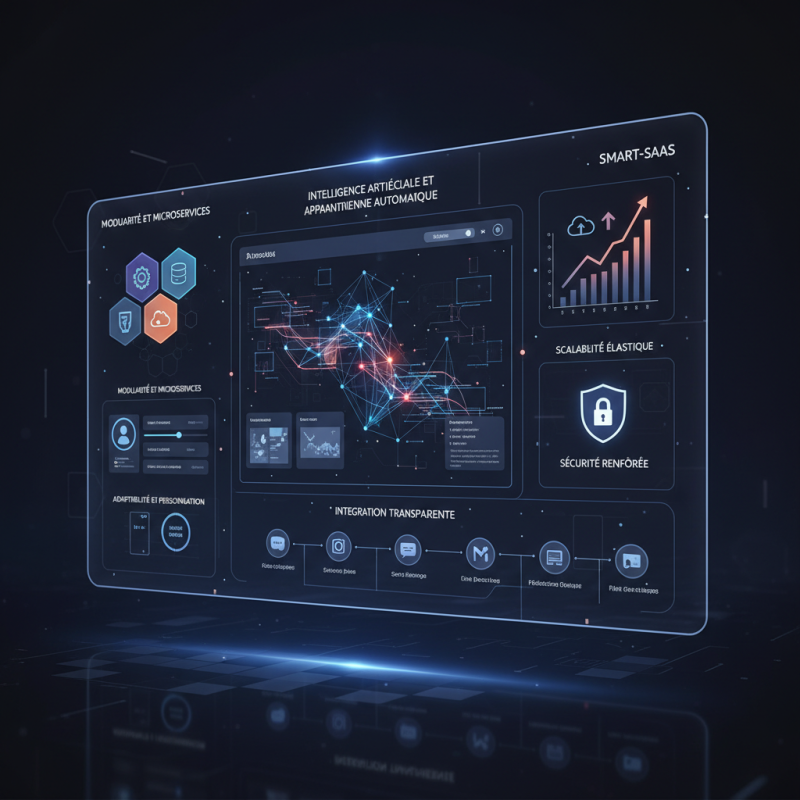
The Era of Adaptive "Smart-SaaS": When AI Redefines Software Personalization
The concept of AI-powered adaptive "Smart-SaaS" marks a major evolution in online software offerings. This article explores how AI enables real-time, proactive personalization, transforming the user experience and business models.
Adaptive "Smart-SaaS": The Next Wave of AI Personalization
Beyond the fact that these techniques have already been in place for a year, we have observed an overall increase in sales, and the Software as a Service (SaaS) landscape was undergoes a major transformation. After the initial migration phase to the cloud and the maturity of standard offerings, the focus is now on hyper-personalization, driven by sophisticated Artificial Intelligence systems. The term adaptive "Smart-SaaS" refers to platforms that no longer settle for offering features based on static profiles, but instead dynamically modify their interface, workflows, and recommendations based on the context and immediate behavior of the user.
Beyond Static Personalization
Historically, SaaS personalization relied on predefined rules or manual configurations during onboarding. Adaptive Smart-SaaS, however, uses Machine Learning to analyze massive volumes of interaction data. The goal is no longer just to remember preferences, but to anticipate needs.
For example, in a CRM platform, a sales representative might see tracking data for prospects most likely to convert today automatically surfaced, without having had to configure a specific dashboard. In a project management tool, AI could reorganize priority tasks based on detected workload and imminent deadlines, even adjusting the complexity of displayed steps for a user who is novice at a given task.
The Technological Pillars of Adaptation
The success of Smart-SaaS relies on several interconnected technological pillars:
- Real-Time Behavioral Analysis: Algorithms monitor clicks, time spent on specific features, and navigation paths to build a predictive model of current needs.
- Generative Models (Generative AI): For content or support tools, AI can generate responses, drafts, or summaries that are immediately tailored to the user's skill level and specific jargon.
- Continuous Model Updates: Unlike periodic software updates, the adaptive core of Smart-SaaS evolves continuously, integrating every new interaction into its decision-making process.
Impact on User Experience and Adoption
The main advantage of this approach is a drastic reduction in user friction. Less time spent searching for the right feature, fewer menus to navigate, and information presented at the optimal moment significantly boost operational efficiency.
For software publishers, this translates into improved retention rates (Churn Rate) and higher perceived product value. Users are less likely to migrate to a competitor if their tool seems to intuitively "understand" their daily work. Pricing models are also beginning to incorporate this added value, shifting toward structures based on performance driven by AI adaptation.
Challenges and Outlook
Despite its potential, adaptive Smart-SaaS raises significant challenges, particularly regarding data privacy. Such deep personalization requires extensive access to usage data, demanding strict transparency and governance.
Furthermore, the risk of an algorithmic "black box" is real. Users must be able to understand why certain recommendations are made. Future advances will focus on Explainable AI (XAI) to ensure that adaptation remains a tool in service of humans, rather than an algorithmic dictatorship.
In conclusion, adaptive Smart-SaaS is not merely an additional feature, but a fundamental overhaul of how enterprise software interacts with users, promising unprecedented productivity gains in the years to come.