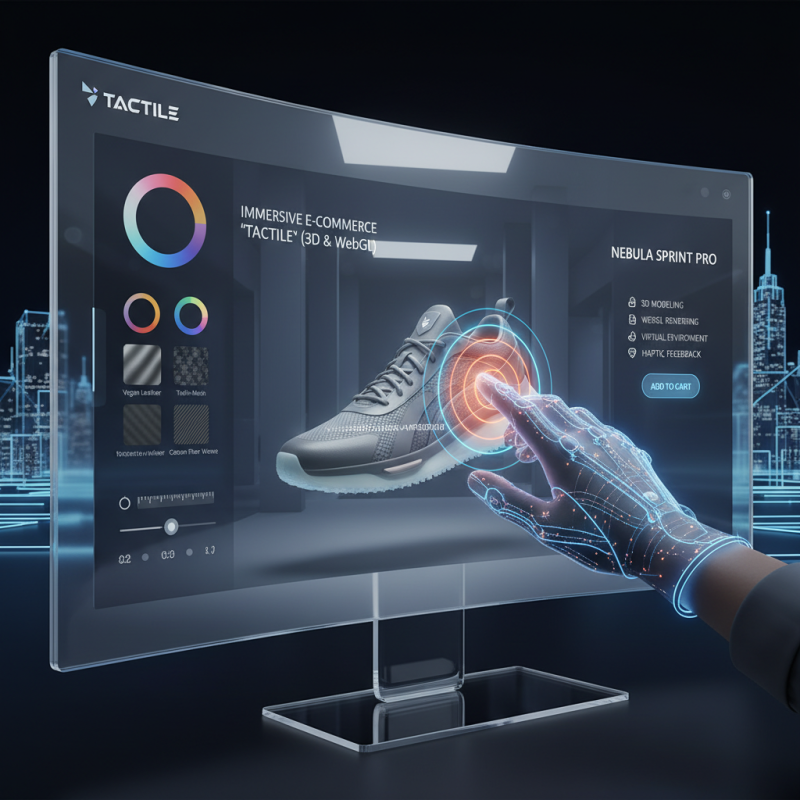
E-commerce Moves to the Age of Touch: The Rise of Immersive 3D Experience via WebGL
The integration of 3D and WebGL is revolutionizing e-commerce by offering virtual and "tactile" shopping experiences, reducing uncertainties associated with online purchases.
Immersive E-Commerce: When the Web Becomes Tactile
E-commerce, a cornerstone of the digital economy, faces a constant challenge: replicating the sensory experience of physical shopping. Unable to touch, feel, or try on a product behind a screen, return rates remain high. The technological solution to this issue lies in the widespread adoption of immersive technologies, particularly 3D and WebGL (Web Graphics Library).
WebGL: The Engine of the Visual Revolution
WebGL is a JavaScript API that enables the rendering of interactive 2D and 3D graphics directly within any compatible browser, without requiring external plugins. Its adoption has democratized access to rich, high-performance graphical experiences, paving the way for a new generation of virtual storefronts.
For the online retail sector, this means the ability to showcase products from every angle with unprecedented realism. Consumers can now virtually manipulate objects, zoom in on textures, and visualize items within their own surroundings through Augmented Reality (AR) built on these same 3D technologies.
The Virtual "Tactile" Experience: Reducing Uncertainty
The primary goal of immersive e-commerce is to bridge the gap between the virtual and the physical world. By allowing users to interact with high-fidelity 3D models, brands can significantly boost shopper confidence. It is no longer just an image, but a simulated hands-on experience.
The industries most impacted are those where spatial and material perception is critical:
- Furniture and Home Decor: Customers can place a 3D sofa or shelf in their living room via AR to check for scale and color harmony.
- Automotive: Real-time vehicle configuration, interior exploration, and visualization of custom options.
- Fashion and Jewelry: Viewing jewelry under different lighting conditions or virtual try-ons for clothing, though this application is still maturing.
Competitive Advantages and Future Prospects
Implementing 3D/WebGL solutions is no longer a luxury, but a competitive edge. Studies show that product pages featuring 3D views see a notable boost in conversion rates and a significant drop in product returns, as customer expectations align better with the received item.
Future developments are heading toward the integration of WebXR (XR for eXtended Reality), which will natively blend 3D web experiences with virtual reality (VR) and augmented reality (AR) headsets. This promises virtual "shopping centers" where interaction will feel even more natural and intuitive. WebGL, as an open and accessible standard, remains the essential foundation of this digital transformation.
In conclusion, "tactile" e-commerce powered by 3D and WebGL marks a key milestone toward a digital maturity where online shopping will be just as informative and engaging as buying in a physical store.