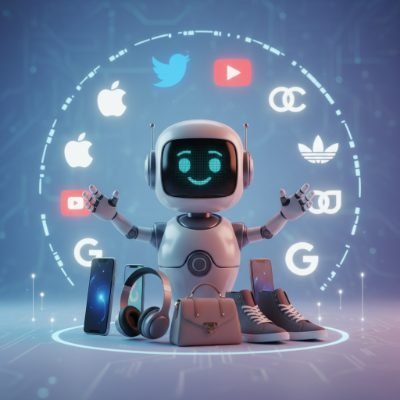
Brand AI: Revolution or Evolution of Digital Marketing?
Discover how embedding brands into the core of artificial intelligence is redefining marketing strategies, offering new opportunities for personalized engagement while raising crucial ethical questions.
We see it with Sora right now—OpenAI is having trouble releasing it in Europe, likely due to the international community taking up arms, if you'll pardon the pun, by brandishing branding against the legitimate use of their trademarks. I read that a famous singer was offended at not having a say regarding the use of his image. The guy isn't well-known, which is worth noting... but still.
Artificial intelligence (AI) is already a transformative force in digital marketing, but a new dimension is emerging: branded AI, or "Branded AI." This concept, where brands integrate directly into AI systems—even pointing toward a model where users pay for an AI "enriched" by specific brands—promises to redefine customer engagement and advertising strategies. Far from being simple intrusive advertising, it represents a deep embedding of brand identity and offerings right at the core of the conversational or functional AI experience.
What is Branded AI?
Branded AI represents a model where commercial entities invest to ensure their products, services, or core identity are intrinsically woven into the answers, recommendations, or features of an artificial intelligence. It is no longer just about running ads through AI, but enabling the AI itself to become a brand channel capable of:
- Generating brand-compliant content: The AI is trained on brand-specific datasets to produce text, images, or ideas that respect its tone, style, and values, ensuring seamless consistency.
- Providing personalized recommendations: Based on user preferences and interaction history, the AI suggests products or services from partner or integrated brands, going beyond basic search to offer a curated and relevant experience.
- Becoming an interactive brand ambassador: The AI can answer product queries, guide users in their choices, or even simulate an interaction with the brand itself, offering an enhanced sales experience and customer service available 24/7.
This model also suggests that users might eventually opt for "premium" or thematic AI versions that specifically integrate their favorite brands, or that brands pay for privileged placement and favorable algorithmic treatment within consumer-facing AIs, transforming AI into a new form of digital product placement.
What is at Stake for Digital Marketing
The advent of branded AI opens up unprecedented prospects for marketers and consumers alike:
- Hyper-personalization: AI can deliver messages and offers of unmatched relevance, adapting in real time to user needs and contexts, thereby significantly boosting conversion rates and customer satisfaction.
- New revenue streams and business models: Brands can monetize their presence within AIs, and AI developers can offer premium "placements" or integrations, creating a complex economic ecosystem.
- Deeper customer engagement: Continuous, contextual interaction with a "branded" AI can strengthen loyalty, brand awareness, and even emotional attachment through memorable experiences.
- Value creation: AI does not merely sell; it can educate, entertain, assist, and solve problems, creating significant added value for the user while promoting the brand organically.
Challenges and Ethical Considerations
Despite its potential, branded AI raises several important questions that must be addressed rigorously:
- Transparency: How can we guarantee that users clearly distinguish neutral recommendations from sponsored or branded content? The line between information and advertising must remain crystal clear to maintain trust.
- Consumer trust: Overly aggressive, opaque, or manipulative integration could erode user trust in both the AI and the brands, leading to user pushback.
- Algorithmic bias: Brands could influence algorithms to favor their products, potentially at the expense of choice diversity, objectivity, or the user's best interest.
- Data protection and privacy: Integrating brand data with user data raises heightened concerns regarding privacy, data security, and ethical use.
Conclusion: Toward an AI-Branded Future
Branded AI is more than a passing trend; it is a logical step in the convergence of artificial intelligence and marketing. It promises richer, more personalized, and potentially more useful interactions between brands and their audiences. To succeed, this new era will demand a delicate balance between technological innovation, adding real value for the user, and maintaining unassailable ethics around transparency and privacy. The future of digital marketing will undoubtedly be marked by artificial intelligence, and the deep integration of brands into these systems will be a key component shaping how we discover, interact, and buy.