The Reorganization of Digital Armies
How the AI-cyber fusion, the rise of active cyber defense and the blurring of public-private boundaries are driving the formation of international alliance blocs.
Context: digital forces in transformation
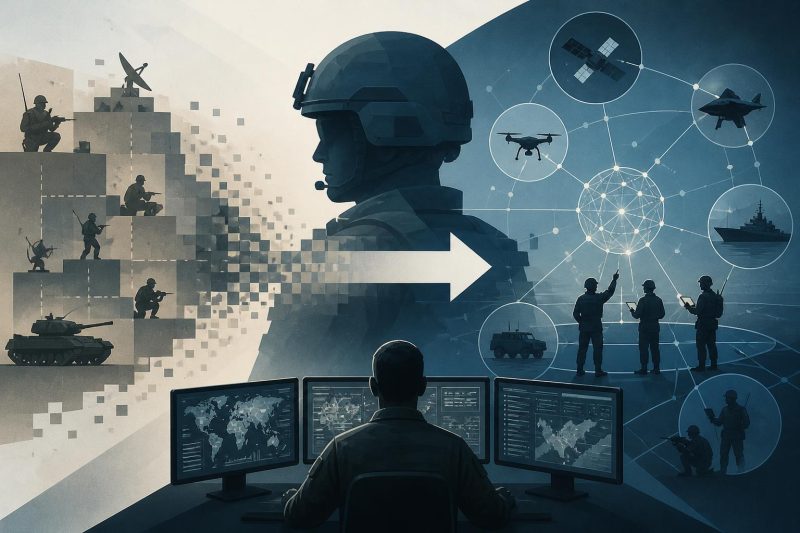
Contemporary defense is no longer limited to land, sea or air forces: "digital armies" — cyber units and digital intelligence — are becoming central to states' strategic posture. This transformation is accelerating under the influence of three converging trends: the integration of artificial intelligence (AI) into cyber capabilities, the progressive adoption of active cyber defense postures, and the growing permeability between public and private actors.
AI and cyber: an operational fusion
AI amplifies the reach and speed of digital operations. It supports automation of intrusion detection, incident triage, near-real-time response and, potentially, targeted offensive capabilities. This fusion requires common technical architectures, interoperability standards and, above all, clear rules of engagement to limit the risks of escalation or algorithmic error.
From passive defense to active defense
Several states are reconsidering the line between protection and response. Doctrines such as those advanced by Japan highlight a shift toward "active cyber defense" — allowing proactive measures to neutralize threats before they materialize. These approaches force a redefinition of international and national legal frameworks — notably regarding sovereignty, attribution and proportionality.
Structuring international alliance blocs
Faced with transnational threats and technological dependence, states are looking to consolidate digital alliance blocs. These blocs do not always follow traditional lines: they rely on technological compatibility, political trust, common rules and shared capabilities.
Main components of a digital bloc
- Technical interoperability: shared standards for intelligence, sharing of IoCs (indicators of compromise) and response platforms.
- Common legal framework: rules on data collection, preventive action and judicial cooperation.
- Information-sharing mechanisms: exchange centers, joint exercises and rapid notification protocols.
- Public-private partnerships: integration of critical infrastructure operators and technology companies.
- Collective deterrence capability: joint declarations, coordinated response options and sanctions.
Role of existing organizations
Organizations like NATO have already embedded cybersecurity into their doctrine, treating it as an element of deterrence and collective defense. At the national level, entities such as Cyber Command Belgium (CCB) structure capabilities and facilitate cooperation with partners. At the same time, diplomatic actors stress the need for an international framework to limit abuse and establish norms of behavior in cyberspace.
Risks and conditions for success
Forming digital blocs offers advantages (pooling capabilities, improving resilience) but carries risks: technological dependence, fractures between states with or without advanced capabilities, and risks of automated escalation. To be effective and responsible, these blocs must rely on transparency, operational standards, multilateral governance mechanisms and strong partnerships with the private sector.
Recommendations
- Develop technological standards and regular joint exercises.
- Establish international legal frameworks on the use of AI in cyber operations.
- Strengthen public-private information-sharing platforms while protecting fundamental freedoms.
- Encourage the inclusion of states with diverse capabilities to avoid strategic fragmentation.
Conclusion
Reorganizing digital armies requires forming international alliance blocs capable of combining technologies, doctrines and governance. Success will depend as much on technical robustness as on the quality of norms, legal cooperation and dialogue between states and companies.