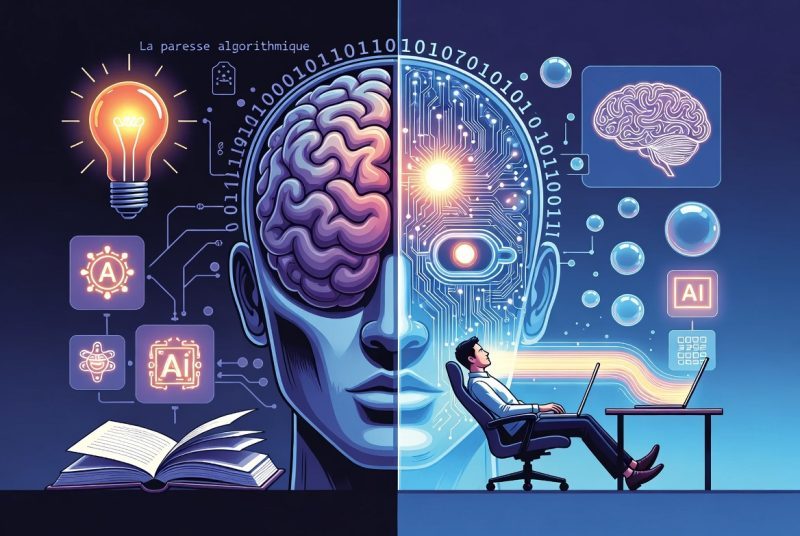
Algorithmic Laziness: Between Cognitive Comfort and Technological Optimization
In the age of artificial intelligence, 'algorithmic laziness' is redefining our relationship with intellectual effort. An analysis of a double-edged phenomenon.
A New Form of Digital Dependence
In a world where information is instantaneous and solutions are generated in seconds, a concept is emerging in discussions about digital transformation: algorithmic laziness. This phenomenon refers to a form of cognitive delegation where humans, for efficiency or simple comfort, systematically rely on algorithms to make decisions, create content, or solve complex problems.
Far from being a mere anecdote related to smartphone use, this trend raises fundamental questions about our ability to maintain critical thinking. While digital tools are designed to optimize our time, they also create a zone of intellectual comfort where the effort of reflection becomes optional.
The Law of Least Effort: The Trap of Ease
The first aspect of algorithmic laziness is behavioral. It follows the 'law of least effort,' a psychological principle suggesting that individuals instinctively favor tasks requiring the least energy. Faced with an intuitive interface, the human brain tends to be guided by the algorithm's suggestions:
- Confirmation bias: Recommendation algorithms (YouTube, TikTok, X) trap us in filter bubbles, reinforcing our opinions without us needing to seek out contradictory viewpoints.
- Decision-making atrophy: By automating daily choices (GPS routes, reading suggestions, automatic email replies), we gradually lose the habit of autonomous analysis.
- Dependence on generative tools: With the rise of LLMs (Large Language Models), writing or synthesizing information becomes a delegated task, sometimes reducing the process of structuring thought inherent to writing.
Optimization: A Necessity or an Illusion?
On the opposite side of this critical view, proponents of technological optimization see algorithmic laziness as a necessary step in human evolution. For companies and knowledge workers, delegating repetitive tasks to algorithms frees up time for higher value-added activities.
This 'laziness' then becomes a strategy for managing mental load. In an information-saturated environment, the algorithm acts as an indispensable filter. Optimization lies not in abandoning thought, but in transferring cognitive load to tools capable of processing data volumes inaccessible to the human brain.
The Risk of Skill Obsolescence
The real danger of algorithmic laziness lies not in the tool itself, but in how we use it. When delegation becomes systematic, there is an erosion of so-called 'fundamental' skills. If we no longer engage our ability to synthesize, verify a source, or formulate complex arguments, these faculties eventually weaken.
The challenge for the coming years is 'algorithmic literacy.' This means understanding how these systems work to remain in control. The informed user should not be a passive consumer of AI suggestions, but a conductor capable of criticizing, correcting, and guiding the results produced by the machine.
Conclusion: Towards Reasoned Use
Algorithmic laziness is an ambivalent phenomenon. It is both the engine of increased productivity and a symptom of intellectual disengagement. The key lies in balance: using the algorithm as a lever of power rather than a crutch. As the philosopher of technology emphasizes, the tool should not replace the agent, but amplify their capabilities. To avoid laziness, it is imperative to maintain spaces of intellectual 'friction,' where the human remains indispensable.
Sources
- Carr, N. (2010). The Shallows: What the Internet Is Doing to Our Brains. W. W. Norton & Company. - Zuboff, S. (2019). The Age of Surveillance Capitalism. Zulma. - CNIL. (2023). Understanding Algorithms: Issues and Challenges for Data Protection. [cnil.fr] - UNESCO. (2021). Recommendation on the Ethics of Artificial Intelligence. [unesco.org]